
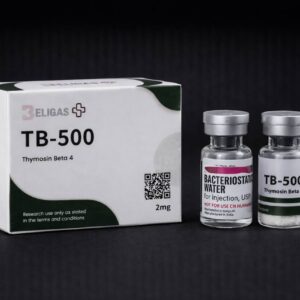
TB-500 is a synthetic analogue of Thymosin Beta-4 (Tβ4), a naturally occurring 43-amino acid protein found at high concentrations in blood platelets and wound fluid. It is one of the most well-mapped repair peptides in preclinical science, with research investigating its role in actin regulation, angiogenesis, cell migration, and systemic healing responses following injury.
What Is TB-500?
Thymosin Beta-4 is part of the beta-thymosin family of proteins and plays a central role in cytoskeletal regulation through its binding to G-actin (globular actin). By sequestering G-actin, Tβ4 influences the dynamics of actin polymerisation, a process fundamental to cell motility, tissue repair, and wound healing.
TB-500 is the synthetic, more stable form of the active region of Tβ4. The key distinguishing characteristic of TB-500 in research contexts is its apparent systemic activity — unlike some repair peptides that appear to act locally at the site of administration, TB-500 is studied for its potential to exert effects throughout the organism, making it of particular interest in research protocols examining whole-body healing responses.
TB-500 Research Background
Tissue repair and wound healing: Preclinical studies have examined TB-500’s effects on dermal wound closure, demonstrating accelerated re-epithelialisation and angiogenesis in rodent models. Research published in Annals of the New York Academy of Sciences and Journal of Cell Science documents Tβ4’s role in promoting keratinocyte and endothelial cell migration.
Cardiac research: A significant body of preclinical literature has investigated Tβ4 in cardiac injury models. Studies in rodent infarction models have examined its effects on cardiomyocyte survival, angiogenesis, and cardiac remodelling post-injury. The Thymosin Beta-4 cardiac research programme has been among the most active areas of research in regenerative medicine over the past two decades.
Musculoskeletal applications: Animal studies have examined TB-500 in models of muscle injury, tendon damage, and ligament tears. Research frequently pairs TB-500 with BPC-157 given their complementary mechanisms — BPC-157 showing more localised tissue effects while TB-500 is studied for systemic repair activity.
Anti-inflammatory activity: Tβ4 has been studied for its modulatory effects on inflammatory pathways, including downregulation of pro-inflammatory cytokines in animal models of inflammation.
TB-500 vs BPC-157: Research Comparison
The two most commonly co-researched peptides in recovery-focused literature. Key distinction in preclinical models:
- BPC-157 — local tissue repair, GI protective effects, tendon/ligament healing. Activity concentrated at or near administration site.
- TB-500 — systemic activity, actin regulation, cardiac and dermal repair. Studied for whole-body healing responses independent of administration site.
The complementary nature of these mechanisms is the basis for frequent co-administration in preclinical stacking research.
Reconstitution Guidelines (Research Use)
TB-500 is supplied as lyophilised powder. Reconstitute with bacteriostatic water.
Recommended concentration: 1mg/ml to 2mg/ml.
For precise volume calculations: Peptide Reconstitution Calculator
Storage
- Lyophilised powder: 2–8°C refrigerated, protected from light
- Reconstituted: 2–8°C, use within 28 days
- Long-term: -20°C
- Avoid freeze-thaw cycling
Available Sizes
VITALITY CARTEL supplies TB-500 in 2mg, 5mg, and 10mg vials. 99%+ purity, third-party HPLC verified. CoA available on request. Domestic AU dispatch.

Reviews
There are no reviews yet.